How to Frame a Wall

how to build a wall beginner home owner guide
How to Frame a Wall

How to Frame a Wall: A Step-by-Step Guide for Beginners

Building a wall may sound intimidating, but most interior walls are straightforward framing projects that homeowners can successfully complete with basic tools and patience.

⚠️ Important first note
This guide is for non-load-bearing interior walls only (like adding a room divider or closet wall).
If the wall supports the roof, floor, or another level — stop and consult a professional.


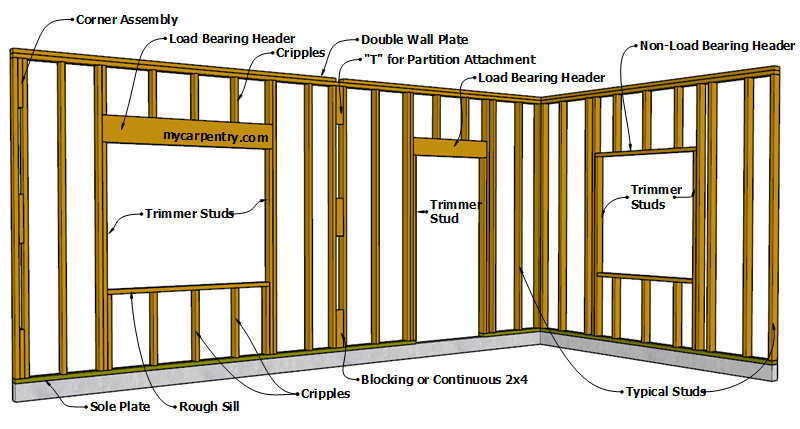
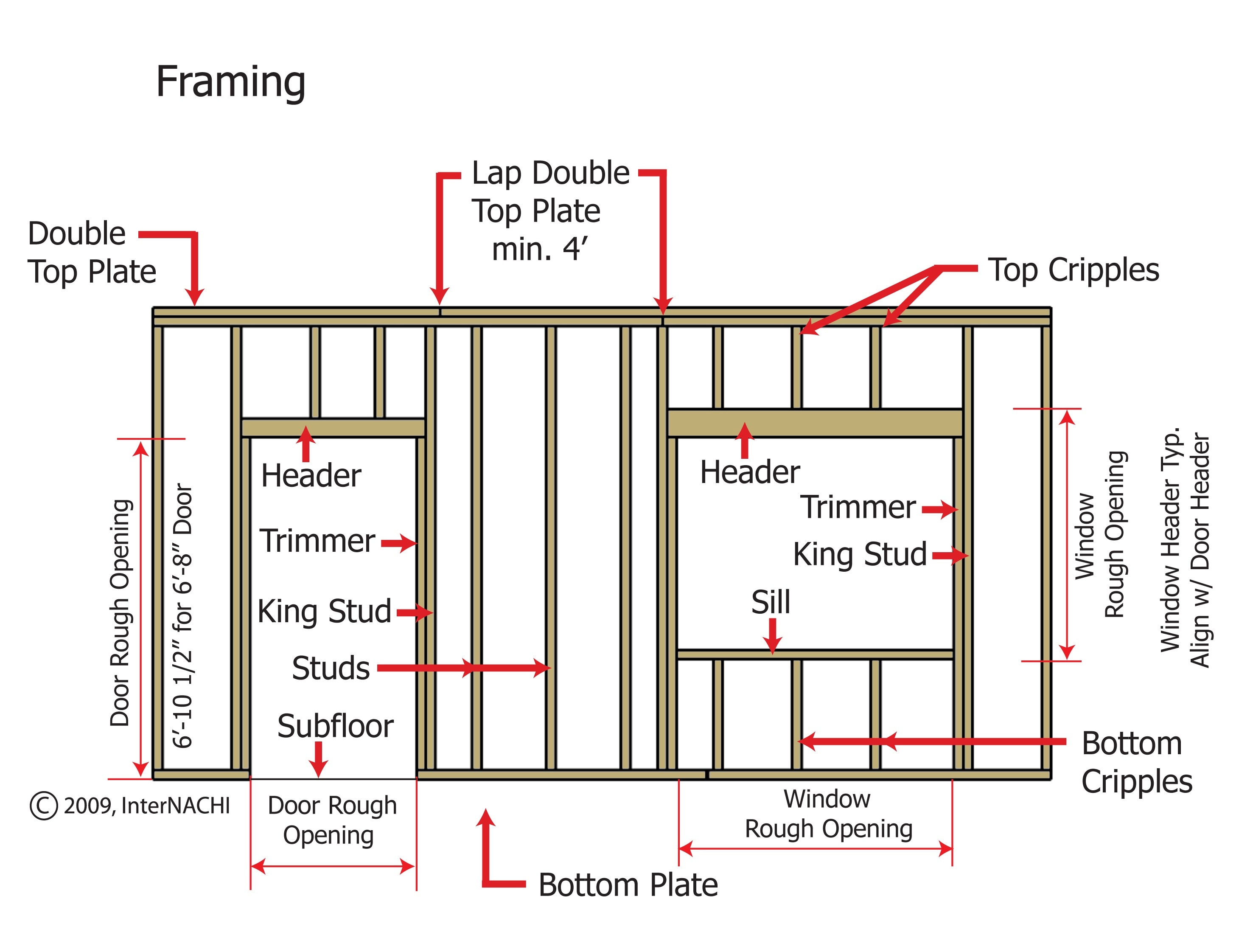
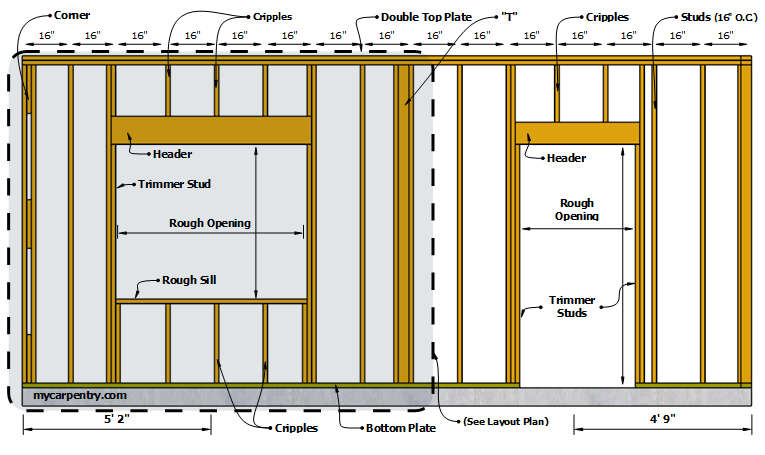
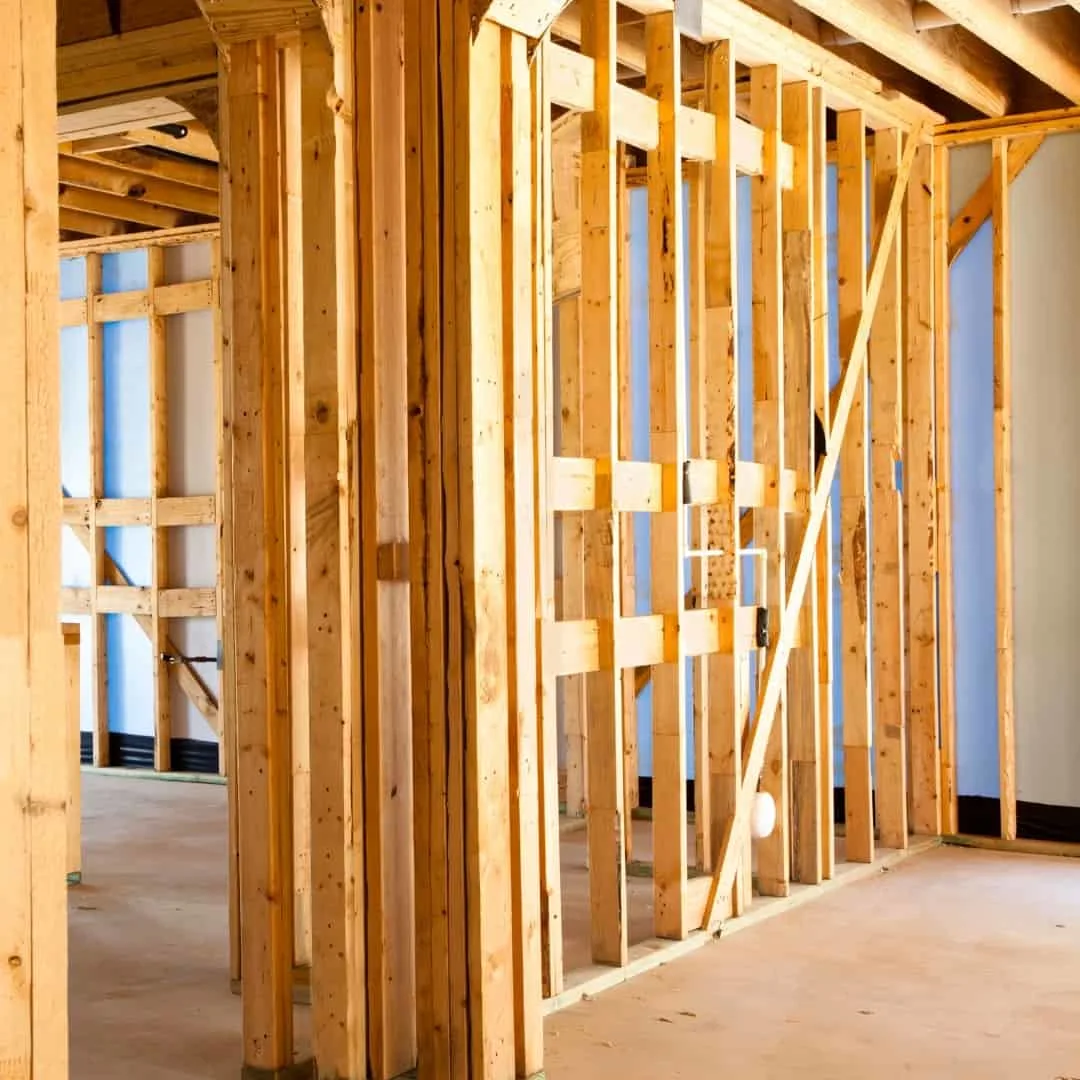
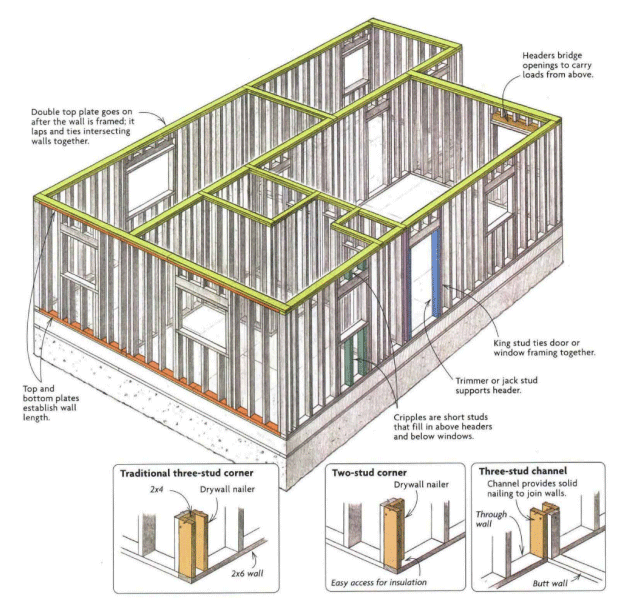
What You’ll Be Building (Big Picture)

A wall is made of:

  • Bottom plate (attached to the floor)
  • Top plate (attached to the ceiling)
  • Vertical studs (usually every 16 inches)
  • Drywall on each side (optional step)
https://www.mycarpentry.com/image-files/framing-a-wall-perspective.jpg
https://res.cloudinary.com/internachi/image/fetch/f_auto%2Cq_auto%3Abest/https%3A//s3.amazonaws.com/uploads-east-1.nachi.org/gallery-images/framing/framing./door-window-framing.jpg

Tools & Materials You’ll Need

Tools (basic homeowner tools)

  • Tape measure
  • Pencil
  • Level (2–4 ft)
  • Drill or impact driver
  • Hammer
  • Stud finder
  • Safety glasses

Materials

  • 2×4 lumber (studs + plates)
  • Wood screws or framing nails
  • Construction adhesive (optional but helpful)
  • Drywall (later step)
  • Drywall screws

💡 Tip: Buy extra lumber. Slight warping is normal.


Step 1: Decide Where the Wall Goes

Mark the wall location clearly before building anything.

https://www.familyhandyman.com/wp-content/uploads/2024/07/Mark-the-Layout-On-the-Floor_FH06DJA_461_07_001_PKedit-e1722366370163.jpg?fit=700%2C700
https://www.jlconline.com/wp-content/uploads/sites/4/2025/06/0517-jlc-ttt-illo-01-isometric-03-rev.jpg?w=600
https://www.mycarpentry.com/image-files/framing-a-wall.jpg

How to do it:

  1. Measure and mark the wall line on the floor
  2. Use a chalk line or straight edge
  3. Transfer those marks straight up to the ceiling using a level

✅ If the floor and ceiling lines don’t line up perfectly, fix this now.


Step 2: Cut the Top and Bottom Plates

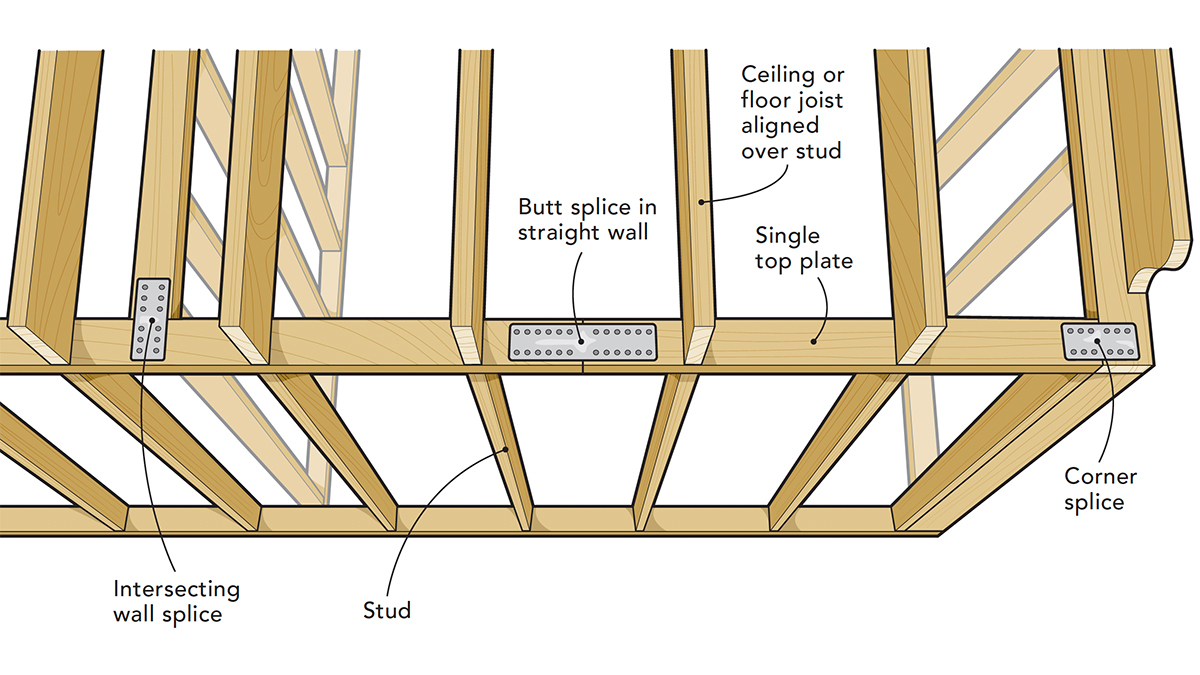
The plates are the horizontal boards that hold everything together.
https://images.finehomebuilding.com/app/uploads/2022/03/02140331/021306020-main.jpg
https://www.thehandymansdaughter.com/wp-content/uploads/2020/10/2x4-framed-wall.jpg.webp
https://d4c5gb8slvq7w.cloudfront.net/eyJlZGl0cyI6eyJyZXNpemUiOnsid2lkdGgiOjYzNSwiaGVpZ2h0Ijo2MTV9fSwiYnVja2V0IjoiZmluZWhvbWVidWlsZGluZy5zMy50YXVudG9uY2xvdWQuY29tIiwia2V5IjoiYXBwXC91cGxvYWRzXC8xOTk5XC8xMVwvMTkxNDMzNDJcL2RyYXdpbmctLnBuZyJ9
  • Cut two 2×4s the exact wall length
  • One goes on the floor (bottom plate)
  • One goes on the ceiling (top plate)

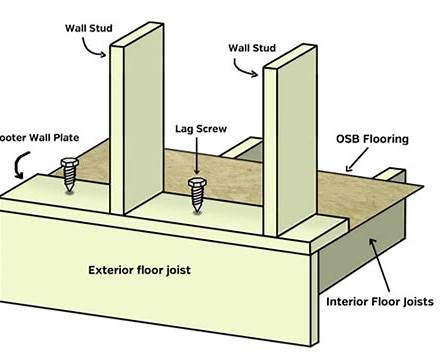
Step 3: Attach the Bottom Plate to the Floor
https://www.lbp.govt.nz/assets/lbp/images/codewords/84-figure2-concrete-masonary-header-block-foundation__ResizedImageWzc3MCw3NzRd.jpg
https://www.thespruce.com/thmb/HoeoqbS2X0krRw4qT2tSMp6FdCs%3D/1500x0/filters%3Ano_upscale%28%29%3Amax_bytes%28150000%29%3Astrip_icc%28%29/SPR-how-to-replace-a-subfloor-under-a-wall-5081829-step-03_76040-e4bfbf0bdf5449e7bd6c051acacd174c.jpg
https://lesseverything.com/images/backyardoffice/wall_studs_bottom.jpg

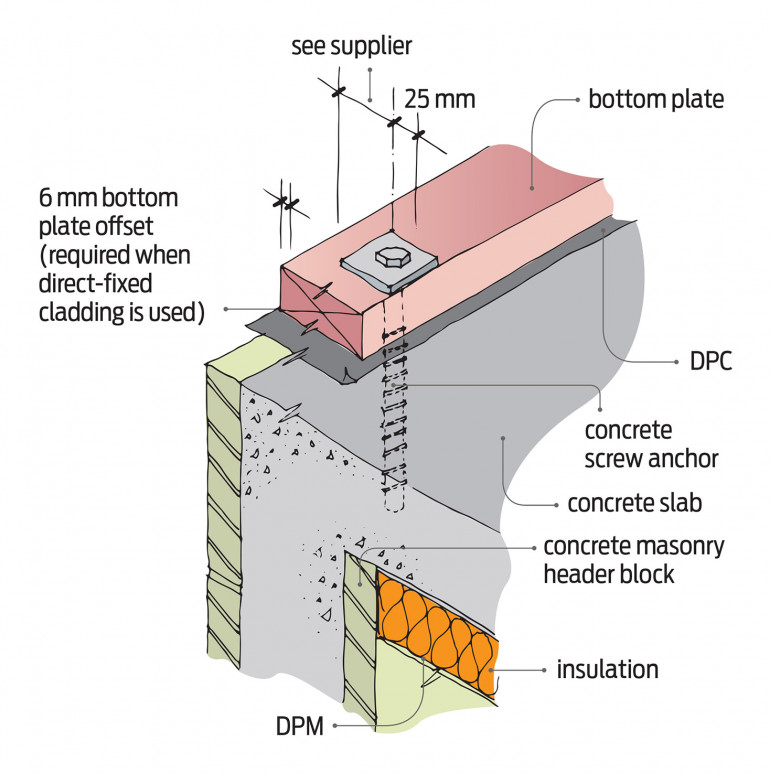
Fastening method depends on your floor:

  • Wood subfloor: wood screws or framing nails
  • Concrete slab: masonry screws or anchors

Fasten every 16–24 inches.


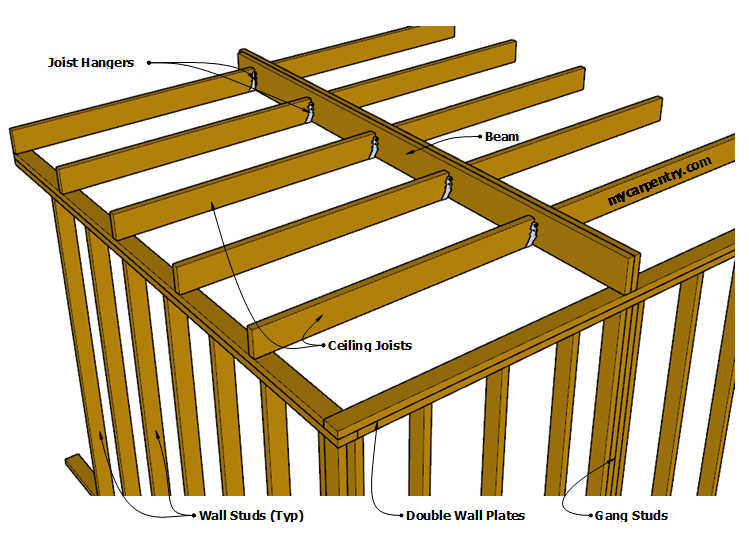
Step 4: Attach the Top Plate to the Ceiling

https://i.sstatic.net/gzToK.png
https://images.finehomebuilding.com/app/uploads/2022/03/02140331/021306020-main.jpg
https://www.mycarpentry.com/image-files/ceiling-joists-with-beam-and-hangers.jpg
  • Use a stud finder to locate ceiling joists
  • Secure the top plate into joists
  • This gives the wall strength and keeps it straight

⚠️ Do not screw only into drywall.


Step 5: Measure and Cut the Studs

Studs are the vertical boards between the plates.
https://www.makingmanzanita.com/wp-content/uploads/2022/01/Stud-Spacing-diagram.png
https://i.sstatic.net/K3yfr.jpg
https://uploads-cdn.omnicalculator.com/images/framing-stud-calculator.svg

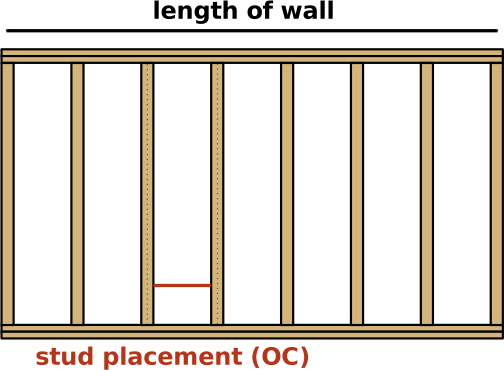
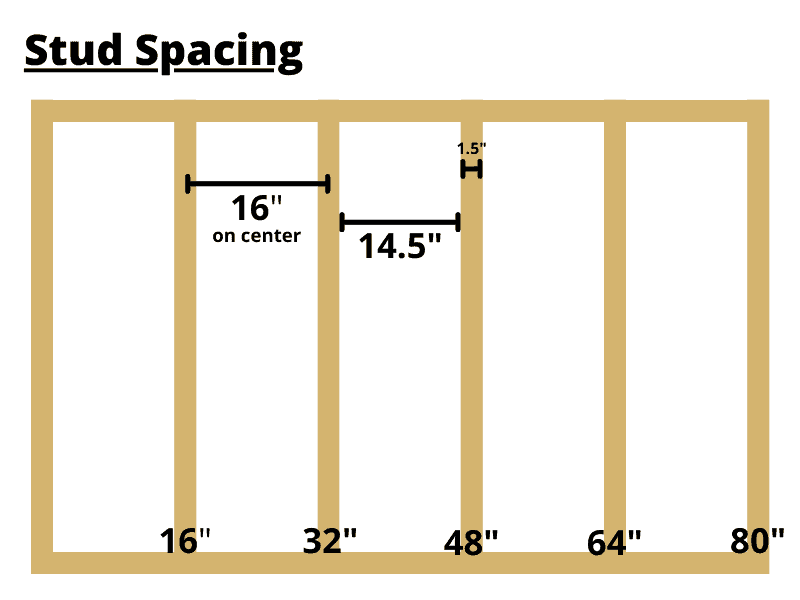
Standard spacing:

  • Studs every 16 inches on center

How to measure:

  1. Measure from bottom plate to top plate
  2. Subtract about ⅛ inch (helps with fitting)
  3. Cut all studs to the same length

Step 6: Install the Studs
https://cdn.forumcomm.com/dims4/default/921a40d/2147483647/strip/true/crop/1142x1847%2B0%2B0/resize/659x1066%21/quality/90/?url=https%3A%2F%2Ffcc-cue-exports-brightspot.s3.us-west-2.amazonaws.com%2Fwctrib%2Fbinary%2Fcopy%2F2e%2F6d%2Fe89b356ec57e4c8b5f99c7259a76%2F283365-0822-f-wct-makeover-framewall-binary-3482243.jpg
https://theplywood.com/wp-content/uploads/2025/08/Precise-Nailing-with-Framing-Tool-683x1024.png
https://res.cloudinary.com/internachi/image/fetch/f_auto%2Cq_auto%3Abest/https%3A//s3.amazonaws.com/uploads-east-1.nachi.org/gallery-images/framing/framing./door-window-framing.jpg

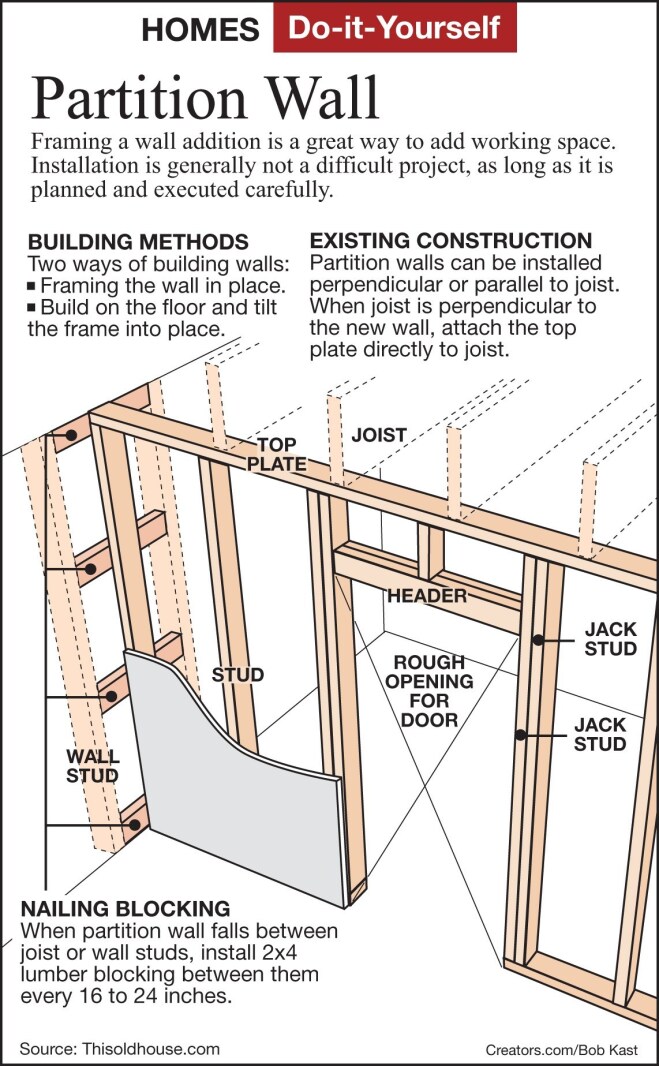
Steps:

  1. Place the stud between plates
  2. Check with a level (must be vertical)
  3. Screw or nail through the plates into the stud

Repeat every 16 inches.

💡 Start with the end studs, then fill the middle.


Step 7: Add Extra Studs Where Needed

Some areas need reinforcement:

https://www.pjfitz.com/wp-content/uploads/2016/05/how-to-frame-a-door-diy.jpg
https://cimg8.ibsrv.net/gimg/www.doityourselft.com-vbulletin/599x799/photo_aug_10_5_47_10_pm_491cdfd35d1bc304d7c06cfde8a87ea68c6261f2.jpg
https://basc.pnnl.gov/file-download/download/public/961

Add studs for:

  • Door openings
  • Heavy shelves or TVs
  • Electrical boxes

Even if you don’t install electrical now, it’s smart to plan ahead.


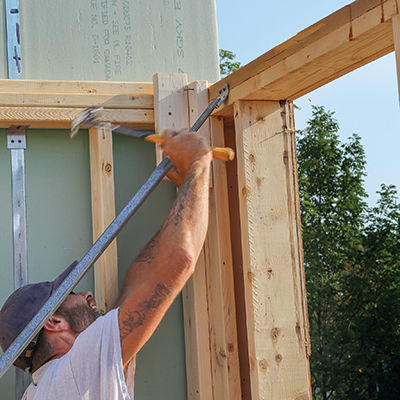
Step 8: Check for Straightness

Before covering the wall:
https://images.finehomebuilding.com/app/uploads/2019/01/04090027/021281069.jpg
https://wxt.cip.mybluehost.me/savingsustainably/wp-content/uploads/2017/12/File-Dec-05-8-56-00-PM.jpeg
https://www.cesinspect.com/wp-content/uploads/2019/11/inspection.jpg
  • Run a level across multiple studs
  • Look down the wall edge (like sighting a board)
  • Fix any bowed or twisted studs now

This saves major drywall headaches later.


Step 9: (Optional) Add Drywall

Once framing is solid, you’re ready for drywall.

https://www.thespruce.com/thmb/haWSUZ2Dn036mDVhxRB9-TPk8iM%3D/1500x0/filters%3Ano_upscale%28%29%3Amax_bytes%28150000%29%3Astrip_icc%28%29/drywall-framing-guide-1821976-hero-4e68b24388d44969ae6c85e5e1bda1f7.jpg
https://www.thespruce.com/thmb/wan5DAsvyJ2cWi73j5suZYtALeA%3D/1500x0/filters%3Ano_upscale%28%29%3Amax_bytes%28150000%29%3Astrip_icc%28%29/drywall-screw-spacing-guide-4125925_v3-HL-5bfdbce7c9e77c00267a7405.png
https://media.angi.com/s3fs-public/drywall-installation-hero-image.jpeg
  • Hang drywall vertically or horizontally
  • Screw into studs every 12–16 inches
  • Tape, mud, sand, then paint

Common Beginner Mistakes (Avoid These)

❌ Not checking if wall is load-bearing
❌ Forgetting to anchor into joists
❌ Uneven stud spacing
❌ Crooked studs
❌ Rushing drywall before checking framing


Final Thoughts

If you can:

  • Measure accurately
  • Use a drill
  • Take your time

You can build a wall.

Start small, work carefully, and remember — framing doesn’t need to be perfect, just straight, square, and secure.

Happy building!

Leave a comment